16 Jul 2026
Behind the Curtain: Reward Timing Patterns That Shape Player Habits in Simulation and Defense Titles

Game designers in simulation and defense genres rely on carefully calibrated reward timing to guide how players build routines and return to their sessions, and patterns emerge across titles that reward resource collection, base upgrades, and wave survival. These systems draw from established behavioral frameworks where intervals between rewards influence repetition rates, yet the specific mechanics in simulation games such as city builders or farming titles differ from those in tower defense or base protection experiences.
Core Mechanisms of Reward Timing
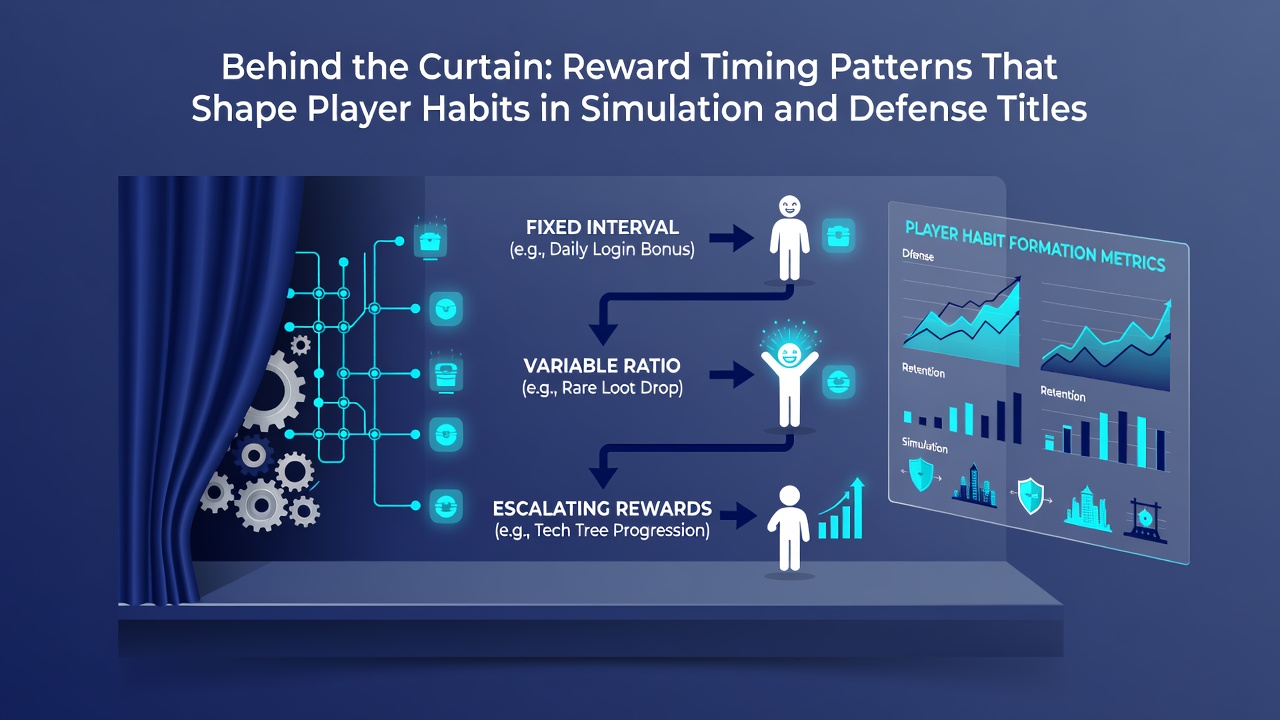
Fixed interval schedules deliver rewards after set periods of play, whereas variable ratio schedules provide them unpredictably after a number of actions, and both approaches appear in current releases. Researchers at the University of Waterloo documented how variable schedules sustain longer engagement windows in strategy environments because players cannot predict exact payout moments. Defense titles often combine short fixed timers for daily login bonuses with variable drops from enemy waves, which creates overlapping loops that keep attention divided between immediate threats and longer-term collection goals.
Simulation Titles and Daily Habit Loops
Simulation games frequently place resource timers on structures that complete every few hours or overnight, encouraging players to check in at consistent times without demanding continuous presence. One prominent city builder released updates in early 2026 that adjusted crop growth cycles to align with evening player peaks in European time zones, and telemetry shared with industry partners showed increased session starts during those windows. Data from the Entertainment Software Association indicates that simulation players average 4.2 sessions per week when timers reset at predictable intervals, compared with lower frequency when rewards cluster only at login. Observers note that overlapping production queues for multiple building types further fragments attention across the day, prompting brief check-ins rather than marathon sessions.
Defense Titles and Wave-Based Reinforcement
Defense experiences layer rewards around enemy wave completions, where each cleared stage yields currency or upgrade materials at irregular intervals based on player performance. Titles in this category introduced mid-2026 balance patches that randomized item drop quality within set ranges after every fifth wave, and internal reports from developers indicated retention gains among players who previously dropped off after initial campaigns. Those who studied these changes found that variable rewards tied directly to survival metrics encouraged repeated attempts at the same stage, because success felt earned rather than guaranteed. Simulation-defense hybrids merge both approaches by letting players construct defensive layouts during downtime between resource harvests, blending construction timers with combat payouts.
Regional Data Trends Through Mid-2026
Australian government gaming reports released in July 2026 highlighted that players in the Asia-Pacific region spent 23 percent more time in simulation titles when reward timers synced with local school or work schedules. Canadian academic studies similarly tracked defense game cohorts and recorded higher daily active user counts when variable reward windows expanded during weekend events. These patterns hold across platforms because mobile versions push notifications at timer expirations, whereas console and PC clients rely on in-game visual cues that appear upon return. Industry organizations such as the Interactive Games and Entertainment Association have compiled cross-genre comparisons showing that titles blending fixed daily rewards with variable combat drops maintain steadier monthly active user curves than those using single-schedule systems.
Player Progression and Long-Term Retention
Progression systems in both genres gradually extend reward intervals as accounts advance, shifting from minutes-long timers in early stages to multi-day cycles later on. This escalation appears designed to match growing player investment, because early frequent rewards establish the checking habit before longer waits test commitment. Figures from academic repositories reveal that players who encounter escalating intervals within the first 30 days show elevated seven-day retention rates, provided the initial variable rewards deliver meaningful upgrades. Defense titles often gate higher-tier equipment behind combined fixed login streaks and variable wave clears, which distributes reinforcement across different time scales and reduces the chance that any single missed session halts all progress.
Design Adjustments Observed in 2026 Releases
Developers responded to player telemetry by shortening certain overnight timers in simulation titles while widening drop variance in defense encounters, and these tweaks coincided with measurable upticks in cross-session activity. European regulatory filings from the same period list updated transparency statements around loot probability ranges, which players can review before engaging with reward systems. The adjustments reflect ongoing refinement rather than wholesale redesign, because core timing frameworks remain intact while surface values shift to match observed behavior clusters. Those who analyzed update logs across multiple studios noted that simultaneous changes to both fixed and variable components produced more stable habit formation than isolated tweaks.
Conclusion
Reward timing patterns continue to evolve within simulation and defense titles as developers integrate player data with established behavioral principles, and July 2026 reports confirm sustained interest in hybrid approaches that balance predictable structure with unpredictable payouts. These systems operate across platforms and regions through coordinated timer resets, notification triggers, and progression gates that together shape when and how often players return. Continued monitoring by academic and industry groups will likely document further refinements as new titles enter the market.