Tracking Behavioral Adaptations Among Players in Virtual Worlds After Large Content Releases
Written by Gisela Long · Jun 28, 2026
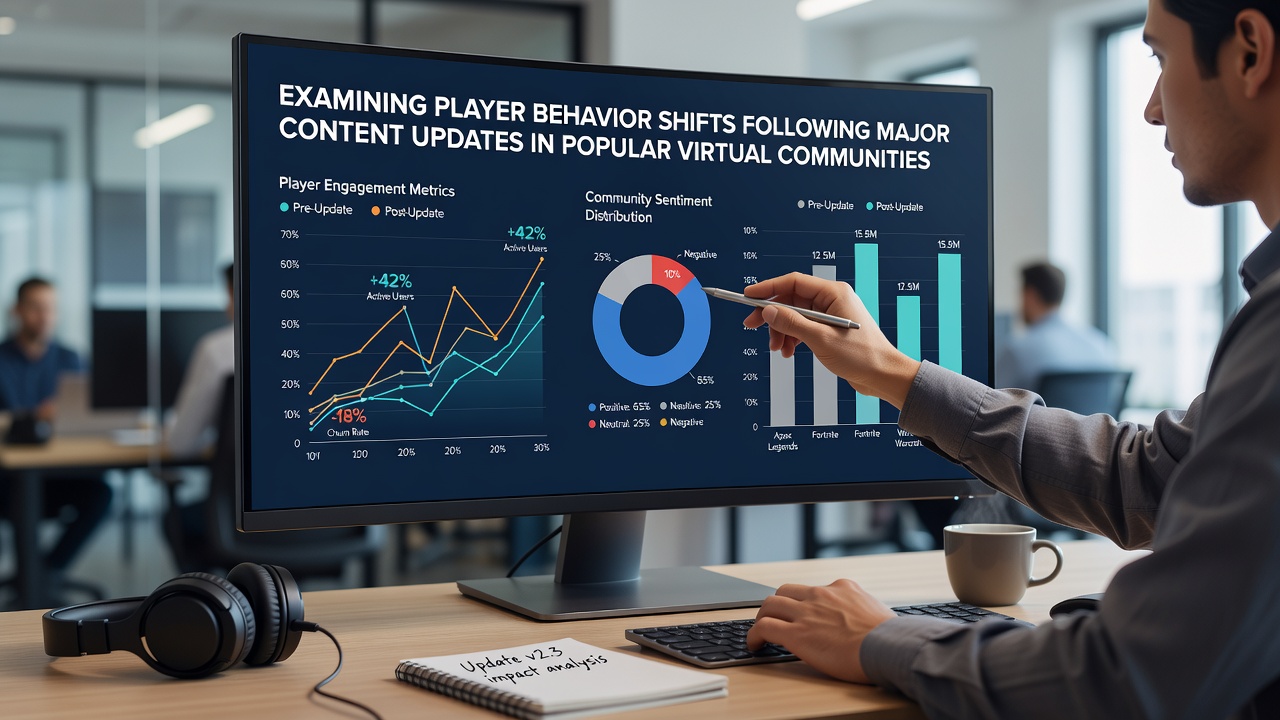
Tracking Behavioral Adaptations Among Players in Virtual Worlds After Large Content Releases
Virtual communities such as massively multiplayer online games and social platforms experience noticeable changes in player activity patterns once developers introduce expansive content patches, and these shifts often appear within days of deployment according to aggregated telemetry from major titles. Researchers at institutions across North America and Europe have documented how populations redistribute across new zones, mechanics, and social systems while older routines fade or transform entirely.
Initial Surge in Engagement Metrics
Data from platform operators shows login rates climbing sharply in the first week after a major release, with session lengths extending by 30 to 50 percent in many cases. Players migrate toward fresh questlines, new character classes, and expanded maps because those elements provide immediate novelty and reward loops. Observers note that social hubs become more crowded as groups coordinate to tackle introductory challenges, creating temporary spikes in voice chat usage and guild recruitment activity. Yet retention curves begin to diverge after the initial wave, with some segments returning to pre-update averages within two weeks while dedicated subgroups sustain elevated play volumes for months.
Changes in Social and Economic Interactions
Marketplaces inside these environments adjust quickly when new items or resources enter circulation. Trade volumes for legacy gear often drop as attention focuses on optimized builds tied to the latest content, and crafting economies rebalance around fresh material nodes. Studies from Australian research centers indicate that player-to-player transactions involving rare cosmetics or mounts increase during these periods because status signaling intensifies among early adopters. Community forums reflect parallel movement, with threads shifting from general discussion toward specialized strategy sharing and theorycrafting focused on the new systems.
One longitudinal analysis covering multiple European titles revealed that cross-faction cooperation events rise when updates include shared world bosses or collaborative objectives, leading to temporary reductions in competitive friction. Those patterns tend to normalize once the content cycle matures and players optimize their individual progression paths.
Longer-Term Habit Reconfiguration
Behavioral data collected through June 2026 across several North American-hosted servers demonstrates that core daily routines evolve rather than simply expand. Players who previously logged in for short resource-gathering sessions now incorporate longer exploration blocks to test new traversal mechanics or environmental storytelling segments. Subscription renewal rates show modest lifts when updates include quality-of-life improvements alongside new challenges, whereas purely additive content without accessibility adjustments correlates with flatter retention curves after the first month.
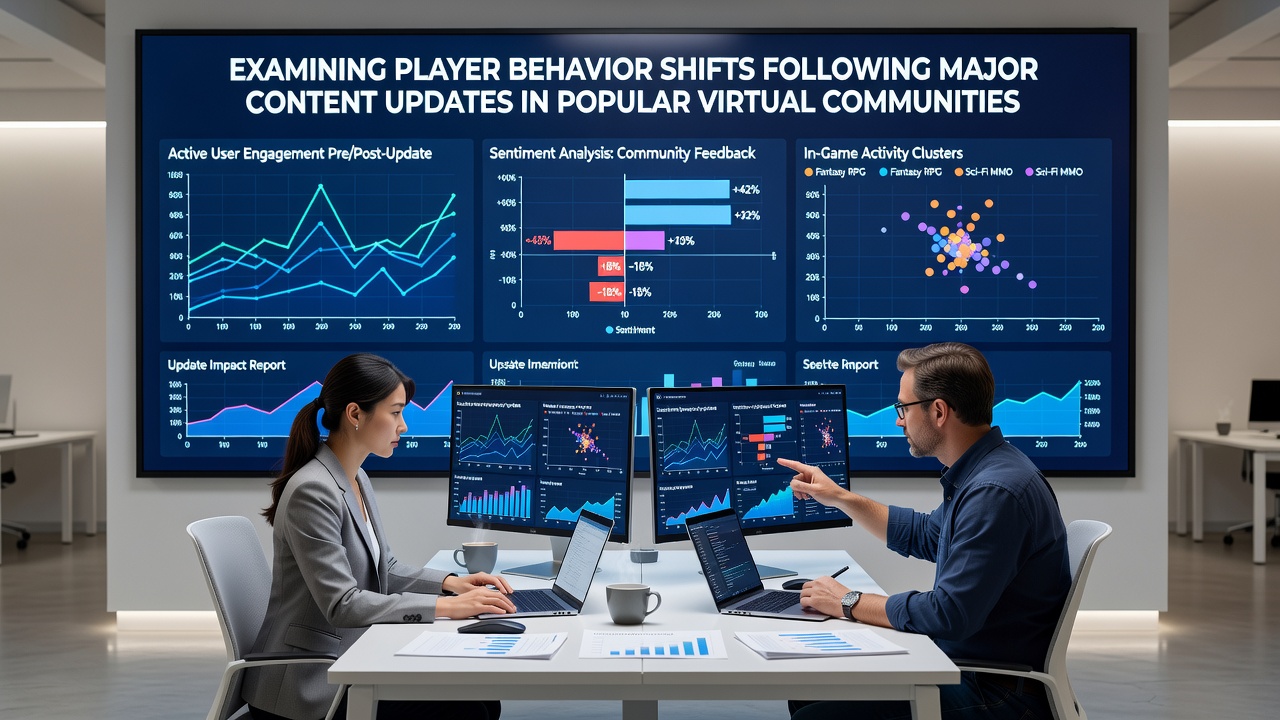
Figures released by the Entertainment Software Association reveal that average time spent in competitive modes declines temporarily as populations sample cooperative or narrative-driven features introduced in the same patch. This redistribution appears most pronounced among mid-tier skill brackets, where participants experiment with unfamiliar roles before returning to established preferences.
Regional Variations in Response Patterns
Analyses conducted by Canadian academic groups highlight differences between time-zone clusters, noting that regions with higher evening overlap see faster community coordination on new raid content compared with more dispersed populations. Meanwhile, reports from regulatory bodies in the Asia-Pacific region track elevated mobile client usage following updates that introduce cross-platform features, suggesting device preferences also shift when accessibility expands. These geographic distinctions underscore how infrastructure and cultural scheduling influence the speed and shape of behavioral adaptation.
Measurement Approaches Used by Analysts
Industry researchers combine in-game telemetry with anonymized survey instruments to capture both quantitative metrics and qualitative motivations behind observed changes. Heatmap visualizations of movement data illustrate how previously underused areas gain traffic once connected by new travel systems or event triggers. Sentiment analysis applied to public chat logs and external discussion boards provides additional context on frustration points or satisfaction drivers that accompany each content cycle. Organizations such as the Digital Games Research Association have compiled comparative case studies across multiple franchises, allowing observers to identify recurring sequences in how populations process novelty.
Conclusion
Player behavior within popular virtual communities undergoes measurable reconfiguration after major content updates, with engagement spikes, social realignments, and gradual habit stabilization forming consistent stages across different titles and regions. Continued collection of telemetry and cross-referenced studies will refine understanding of these dynamics as developers iterate on release strategies through 2026 and beyond.